The e-memory revolution is changing everything.

Be part of the conversation.

Wednesday
Sep142011

SenseCam walk in California Hills

A walk through the hills of California, captured by SenseCam.

Tuesday
Sep132011

LifeLogging and Your Life Uploaded featured in London Times

In Memories Are Made of Disks (subscription) Simon Cox rounds up a nice collection of LifeLogging interviewees, including Gordon Bell, Jim Gemmell, Lyndsay Williams, Cathal Gurrin, and some skeptical neurologists and geographers. The skeptics are given a loud voice, especially in the print edition's "big brother" photo, but all angles are presented in an interesting way.

Monday
Sep122011

ReadiBand - sleep tracking from your wrist

ReadiBand is a wristwatch-like device which tracks wrist movements to estimate how you are sleeping:

Our scientifically proven system is highly accurate. A recent study showed that the ReadiBand™, coupled with our patented classification algorithms, assessed sleep virtually as well as sleep lab polysomnography (93% accurate).

Based on ReadiBand™ data, we provide a range of sleep statistics, such as sleep efficiency, sleep duration, and time to sleep onset. In addition, once the ReadiBand™ data are automatically processed through our patented and validated computer model, fatigue risk levels are calculated and displayed

The ReadiBand was recently used by the Vancouver Canucks in their NHL playoff run. In the video about the Canucks, they also mention wearing the device 24x7 and measuring the impact of sleep on reaction time.

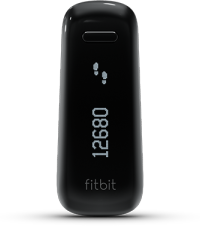
I'm trying out a fitbit now. I wonder how ReadiBand compares?

Friday
Aug262011

Maui beach walk on SenseCam

Friday
Aug052011

Betsy Sparrow, Columbia U. Confirms: MyLifeBits thesis e-memory effectively offloads personal bio-memories

The major thesis of MyLifeBits is that by the e-Memory is ground truth, and that a person's bio-memory is indeed just a URL plus some meta-data to aid human memory search of the e-memory. While the paper addresses finding and recalling web information-- finding and recalling information on personal stores is similarly applicable.

Prof. Sparrow's work is described in an article in Science Magazineon 14 June 2011, and a summary of this is described in the http://news.columbia.edu/research/2490 press release.

A report by John Bohannon in ScienceMag on 15 June stated:

...in four cleverly designed experiments, Sparrow and her colleagues do explore how the Internet may be changing the way people handle such information now. The results, she says, support a growing belief that people are using the Internet as a personal memory bank: the so-called Google effect. What surprised Sparrow most was not people’s reliance on nonmemorized information but their ability to find it. “We’re remarkably effi cient,” she says.

The study is “convincing,” and “there is no doubt that our strategies are shifting in learning,”says Roddy Roediger, a psychologist atWashington University in St. Louis, Missouri “Why remember something if I know I can look it up again? ... we can off load some of our memory demands onto machines.”


Page 1 ... 4 5 6 7 8 ... 23 Next 5 Entries »